

A heavyweight t-shirt isn’t just a thicker tee — it’s a structural choice. The cotton holds its shape, the print stays loud, and the drape sits right whether you’re at the front of a basement show or just walking the dog. If you came up on the nu-metal era, the heavyweight tee is the silhouette your memory is wearing: boxy through the chest, slightly cropped, hanging like it means it. This guide breaks down what “heavyweight” actually means in 2026, why a 6oz garment-dyed cotton tee outlasts a fast-fashion bargain pack, and which NU-METAL drops are built on that exact spec.

What “Heavyweight T-Shirt” Actually Means
Tee weight gets quoted two ways: ounces per square yard (oz) or grams per square meter (GSM). A standard fast-fashion tee runs around 4 to 4.5 oz (roughly 140–160 GSM) — paper-thin, semi-transparent under stage lights, and prone to twisting on the seams after one wash. A heavyweight t-shirt starts at about 6 oz (around 200 GSM) and tops out near 9–10 oz (270–300 GSM) for the ultra-thick gym-rat stuff. The 6 to 7 oz band is the sweet spot for streetwear: dense enough to drape like a premium piece, breathable enough to mosh in without getting cooked.
If you’ve ever picked up a vintage rap-rock concert tee from 2001 and noticed it feels twice as substantial as a modern fast-fashion equivalent, that’s the difference. Heavyweight cotton is what made those tour shirts last 25 years in a closet. It’s also why streetwear brands from Brain Dead to Cactus Plant Flea Market default to it — the fabric reads “premium” the second you pick it up.
Why Heavyweight Cotton Hits Different
Structure That Holds
Thin cotton collapses on the body. Heavyweight cotton stands up — the shoulders sit where they were cut, the hem doesn’t curl, and the boxy, oversized fit that defined the nu-metal silhouette stays boxy after the first wash. That structured drape is the entire reason a graphic tee looks “right” tucked into baggy jeans instead of looking like a sad pajama top.
Print That Pops
Denser fabric is a better canvas. Plastisol and water-based inks sit cleaner on heavyweight cotton, blacks come out blacker, and detail in line work — skulls, tattoo flash, snowboard skeletons — survives wash cycles instead of cracking off in flakes. If your tee art is the whole point, the substrate matters as much as the design.
Color That Doesn’t Quit
More fibers per square inch means more fiber holding dye. Heavyweight garment-dyed tees keep their depth for years; lightweight pieces fade to that grayish-purple “I bought this at the gas station” look after a single summer.
The NU-METAL Spec: 6oz Garment-Dyed Cotton
Every NU-METAL graphic tee is cut from 100% ringspun 6oz cotton and garment-dyed — meaning the finished shirt is dyed after it’s sewn, not the fabric before. Garment dyeing is what gives the pieces that lived-in, slightly washed depth straight out of the bag, without the synthetic shine you get from cheap polyester blends. It’s also what lets the boxy, oversized silhouette settle into place — the shirt has already shrunk and relaxed in the dye bath, so what you get is what you keep.
That’s not marketing copy. It’s the same spec used by independent labels like Krush Kill Records and the heavier end of the Sullen Clothing catalog — the streetwear adjacent corners of the industry that actually care whether their tees still fit in three years. If you’ve been burned by a $14 graphic tee that turned into a crop top after one wash, this is the upgrade path.
Four Heavyweight Tees Built for the Pit
These four drops all run on the same 6oz garment-dyed cotton spec. Pick by graphic; the fabric is identical underneath.



How to Style a Heavyweight Graphic Tee
The whole reason to wear a heavyweight t-shirt is the silhouette. Don’t fight it. Three core moves:
1. Baggy Bottoms, Tucked Half-In
Pair it with wide-leg or baggy jeans — JNCO-inflated denim, baggy cargos, or relaxed carpenter pants. Half-tuck the front. The boxy heavyweight cut creates a visual block at the chest that balances the volume below. This is the foundational nu-metal silhouette and it still reads in 2026.
2. Layered Under Open Flannel or Coach Jacket
Heavyweight fabric layers without bulking out. Throw an open red plaid flannel over the top with the sleeves pushed up, or a black coach jacket with the front unsnapped. The structure of the tee underneath stops the layer from looking sloppy.
3. Solo with a Beanie and Chunky Sneakers
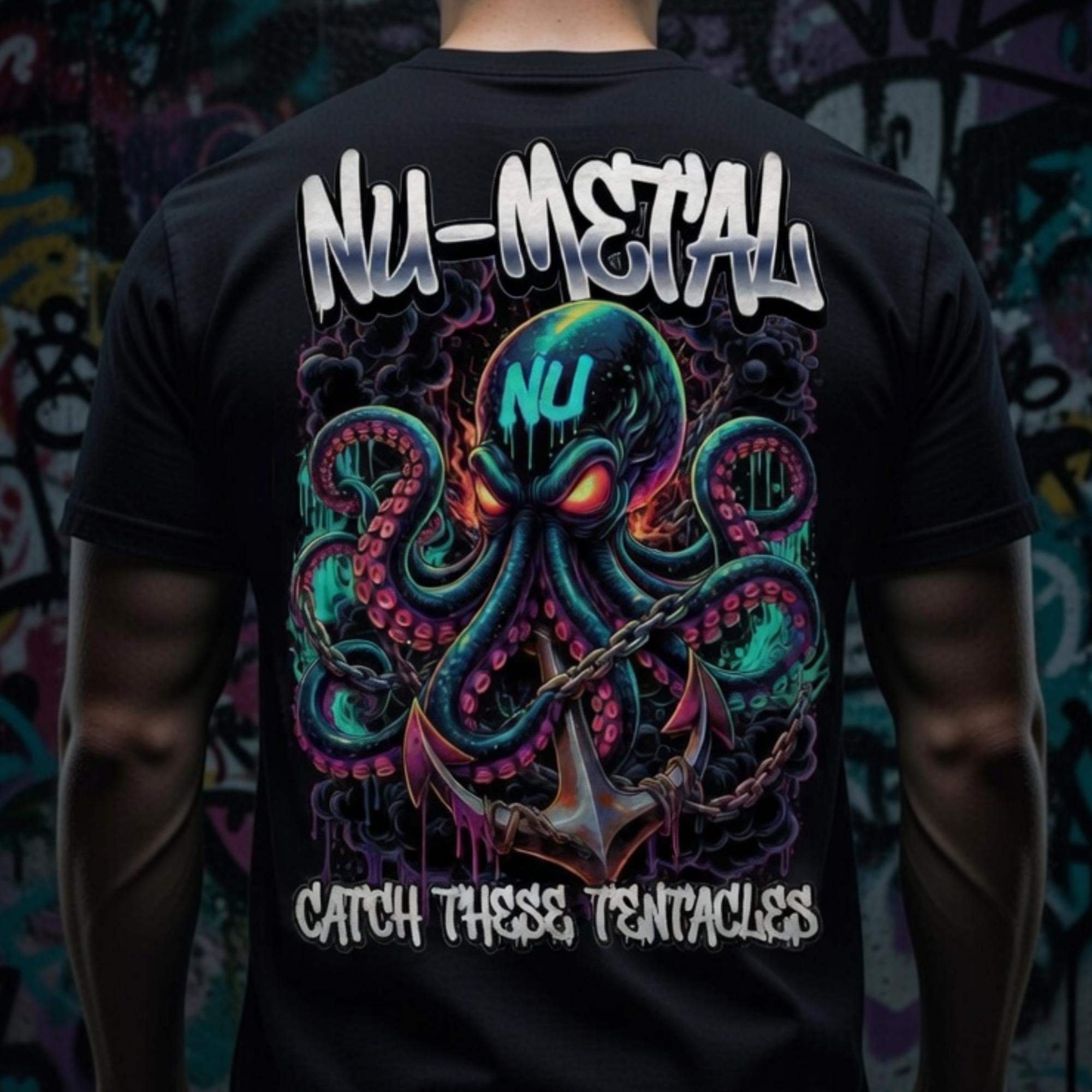
When the graphic is loud — back print octopus tentacles, lowrider skeleton — let the tee carry the fit. A black knit beanie, chunky skate sneakers or platform creepers, and you’re done. The heavyweight drape does the rest.
Browse Every Heavyweight Drop
All NU-METAL graphic tees ship in the same 6oz garment-dyed cotton spec. Limited drops, restocks are never guaranteed.
Care & Longevity
A heavyweight t-shirt earns its price across years, not months — but only if you treat it right. Wash cold, inside out, with similar darks. Skip the dryer if you can; hang or lay flat. Heat is the enemy of both the dye and the print. Iron the back side only if you must, and never directly on the graphic. Done correctly, a 6oz garment-dyed tee will outlive three or four lightweight equivalents and still hold its boxy fit when the fast-fashion ones have stretched into beach towels.
One more thing: resist the urge to size down. Heavyweight tees are designed to sit oversized and drape structured. A size up gives you the silhouette the graphic was drawn for; a size down just makes the fabric look stiff. If you’re between sizes, go up.
FAQ
What weight is a heavyweight t-shirt?
A heavyweight t-shirt typically starts around 6 oz (about 200 GSM) and goes up to 9–10 oz (270–300 GSM). The 6–7 oz range is the streetwear sweet spot: structured enough to drape like premium fabric, breathable enough to wear year-round. Every NU-METAL graphic tee is built on a 6oz garment-dyed cotton base.
Why is heavyweight cotton better than regular cotton?
Heavyweight cotton holds its shape after washing, gives prints a cleaner surface to sit on, and keeps its color longer because more fibers per square inch hold more dye. It’s also the only fabric that gives you the boxy, structured silhouette that defines nu-metal streetwear and contemporary oversized fits.
Will a 6oz heavyweight t-shirt shrink?
NU-METAL tees are garment-dyed, meaning the finished shirt is dyed after sewing — which also pre-shrinks it. Wash cold and air dry and the fit you buy is the fit you keep. Hot wash and tumble dry will still shrink any 100% cotton tee by a small amount.
Are heavyweight tees too hot for summer?
Mid-range heavyweights (6–7 oz, 200–220 GSM) in 100% ringspun cotton are breathable year-round — the cotton wicks moisture and the slightly looser oversized fit lets air move. Ultra-heavy 9–10 oz tees can get warm in peak summer; the 6oz NU-METAL spec is built to wear from spring through fall.
How should a heavyweight oversized t-shirt fit?
Boxy through the chest, slightly cropped at the hem, with the shoulder seam sitting an inch or two past your actual shoulder. Sleeves end above the elbow. If you’re between sizes, size up — the structured drape only works when the tee has room to fall properly. Size down and you lose the entire silhouette.